
Mustard oil vs other cooking oils
Could pure mustard oil be the healthiest oil in your kitchen?
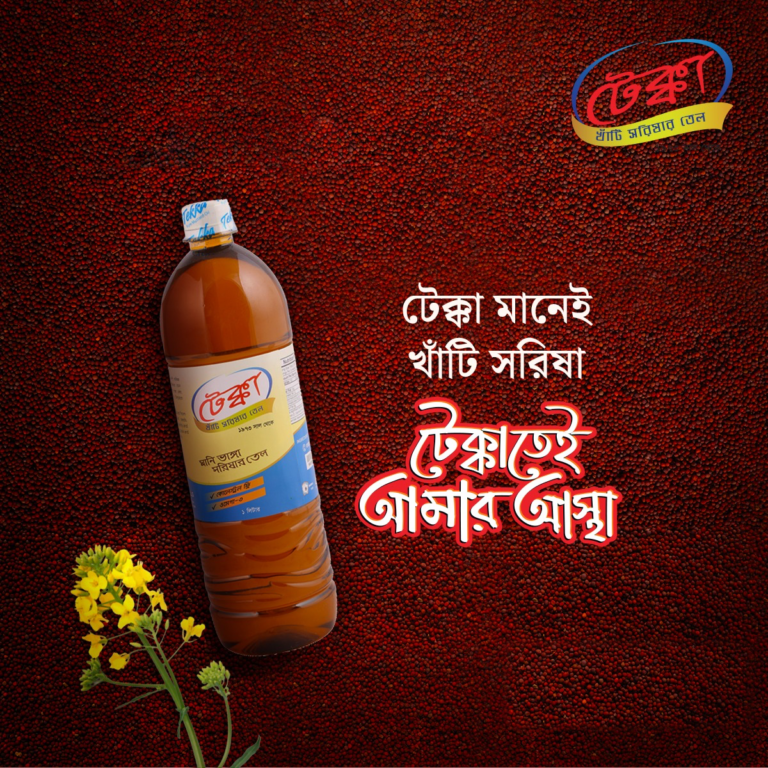
টেক্কা মানেই খাঁটি সরিষা
Many families switched to soybean or palm oil believing it was healthier. The numbers tell a different story. Here’s how pure mustard oil compares with the oils most Bangladeshi homes use every day.
The short answer
Six reasons mustard oil stands out
Pure, cold-pressed mustard oil has one of the best nutritional profiles of any everyday cooking oil, and it suits Bengali cooking perfectly.
Side by side
How mustard oil compares
| Oil | Saturated fat | Omega-3 (ALA) | Trans fat | Best for |
|---|---|---|---|---|
| Pure mustard oil (Tekka / Ghani) | ~12% | ~6–12% | None | Frying, bhuna, bhorta, achar |
| Soybean oil | ~16% | ~7% | Can form when refined | General cooking |
| Sunflower oil | ~10% | <1% | Can form when refined | Light frying |
| Olive oil | ~14% | <1% | None | Salads, low heat |
| Rice bran oil | ~20% | ~1% | Can form when refined | Frying |
| Palm oil | ~49% | <1% | Can form when refined | Commercial frying |
Approximate values per 100 g of oil from published nutrition data; natural mustard oil varies by seed and season. See also The Daily Star: mustard oil and the edible oil crisis ↗
Myth vs fact
“Soybean oil is healthier than mustard oil.”
Not quite. Mustard oil carries more B vitamins (thiamin, riboflavin, niacin, B6 and folate) and important minerals like iron, potassium and calcium, alongside its omega-3 and low saturated fat.
It is also a crop Bangladesh grows at home. More mustard oil in our kitchens means less dependence on imported soybean and palm oil.

Get the most from it
Four simple habits
Make the switch to pure mustard oil
Tekka and Ghani, pressed from pure seed at Janata Oil Mills since 1973.
Nutrition information is general and approximate. It is not medical advice; for specific dietary needs, please consult a doctor or nutritionist.